In the heart of India, a craft called Bidriware continues to thrive despite numerous challenges. With its striking contrast of silver inlay on a deep black surface, Bidri is more than a decorative art—it is a living link to cultural exchange and identity that evolved across generations.
Its real value lies beyond labels; each piece tells a story of resilience, skill, and continuity.
In a world of mass production, Bidri art reminds us of the slow beauty of handmade heritage and the fragile threads connecting culture, sustainability, and memory. When we lose crafts like these, what else do we lose about ourselves—and how can we help ensure this story continues?
Bidriware Craft: Key Takeaways
- 14th-century inlay craft from Bidar, Karnataka.
- Blackened zinc–copper alloy with mainly silver inlay.
- Copper or gold can be used in a few cases to add contrast.
- Sustained by multi-generational Bidar artisan families.
- Contemporary forms include jewellery and décor.
- Artisan numbers are declining despite global interest.
Cultural Roots: Origins & Symbolism
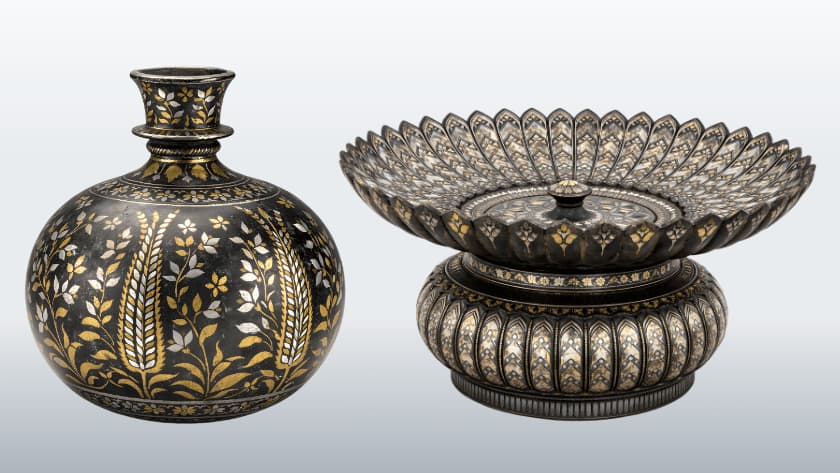
Bidriware Basin by Salar Jung Museum used under CC BY-NC-SA 4.0
Bidriware craft originated in the 14th century in Bidar, Karnataka, under the Bahmani Sultans, where Persian metalworkers introduced inlay traditions that local artisans reshaped into a distinct regional craft. The name “Bidri” binds the tradition to its birthplace, echoing its deep cultural identity.
Its motifs carry symbolic resonance. Persian arabesques and lattices merged with Indian symbols, like the lotus representing purity, the vine evoking continuity, and the peacock embodying beauty and auspiciousness. Quranic verses rendered in silver held devotional significance, while floral sprays reflected the refinement of early courtly settings.
Even the blackened surface holds meaning, becoming associated with endurance and permanence, while silver symbolized illumination and purity.
A 16th-century court record describes a Bidri hookah presented as a diplomatic gift; its inscriptions linked it to hospitality and protection, underscoring the craft’s ceremonial role in early Deccan society.
Craftsmanship: Tools & Techniques
The Art of Bidri by Sahapedia licensed under CC BY-NC-SA 4.0
Bidriware’s artistry begins with an alloy of zinc and copper, transformed through a meticulous, tactile making process. The craft’s hallmark—the deep black surface—emerges from a guarded oxidation technique using mineral-rich soil traditionally sourced from Bidar Fort.
The process unfolds step by step. Artisans cast the alloy, etch and engrave the design using fine chisels, and set silver wire or sheet into carved grooves. The piece is then oxidized, washed, and polished with coconut oil, allowing the silver to gleam vividly against the darkened metal.
The production remains primarily manual, making the craft a sensory experience. One can hear the rhythmic tap of the hammer on the chisel, smell the metallic scent rising from freshly engraved surfaces, and feel the smooth resistance of silver as it burnishes into place.
Design techniques such as Tarkashi (inlay of wires), Teh-nashin or taihnishan (inlay of sheets), Aftabi (overlaid sheet background), and Zar-buland or Zar-nashin (raised high or low relief inlay) require precision, aided by tools like chisels, burnishers, wooden mallets, and polishing stones. Every tool contributes to the tactile finish that defines authentic Bidriware craft.
Living Tradition: People & Expression
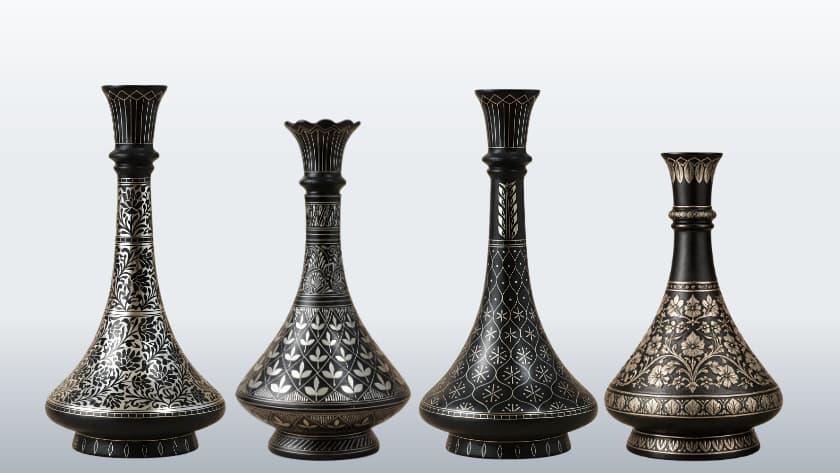
The heart of Bidriware still beats in Bidar, Karnataka, where multi-generational families sustain the craft. Workshops often serve as living spaces, with knowledge passed through close apprenticeship. Women play key roles in polishing, finishing, and increasingly in marketing and outreach.
In Hyderabad, artisans continue regional lineages, producing ornate variations that distinguish the area today. Places such as Aurangabad, Lucknow, and Murshidabad have influenced styles that reflect the essence of local culture.
The Shaikh family of Bidar, artisans for seven generations, exemplifies this continuity. “I learned to hold a chisel before I held a pen,” recalls the youngest member, reflecting how identity and craft remain inseparable.
Modern Bidriware encompasses jewelry, trays, home decorations, and sleek designs tailored for contemporary tastes. Classic motifs are paired with geometric and abstract designs, allowing the craft to resonate with fresh audiences.
Today, Bidri art also travels globally through contemporary markets and exhibitions, allowing the craft’s regional stories to enter international conversations.
Engaging Heritage: Ethics & Display
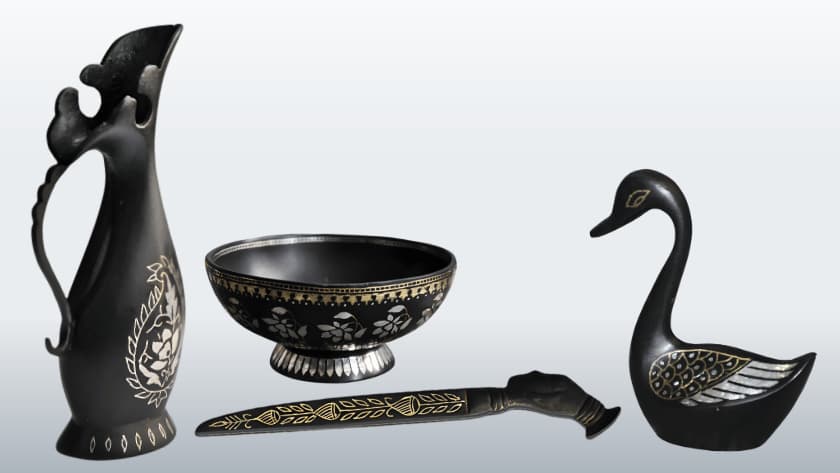
Engaging with Bidriware craft responsibly means supporting the authenticity and well-being of the community. Genuine items feature sturdy silver settings, clean inlay edges, and the distinctive matte black finish achieved through oxidation. GI certification helps verify origin and shields artisan communities from imitation markets.
Ethical purchasing prioritizes direct artisan relationships, cooperatives, and certified sellers, ensuring fair compensation and transparent sourcing. Supporting such channels strengthens local economies and protects endangered skills.
Respectful display deepens appreciation. Bidri craft carries cultural narratives, and presenting them with maker information or contextual notes preserves those stories. As one artisan observed, each buyer “becomes part of the craft’s future.”
Care practices sustain longevity: avoid abrasives, harsh polishes, and prolonged sunlight; a soft cloth and occasional rubbing of coconut oil preserve the surface.
Thoughtful stewardship turns ownership into cultural participation, bridging artisans’ work with informed appreciation.
Preserving Tradition: Challenges & Revivals
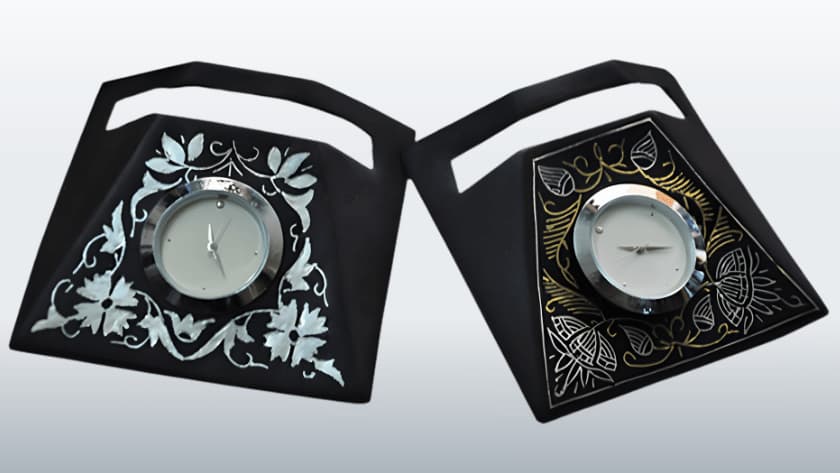
Bidriware faces significant pressures. Artisan numbers have declined from mid-20th-century levels, and rising raw material costs, reduced access to soil, and limited apprenticeships endanger continuity. The rising demand for inexpensive décor intensifies competition, compelling handmade goods to compete with mass-produced alternatives.
Yet collective responses offer hope. The Karnataka State Handicrafts Development Corporation supports design variety and wider market access. Collaborations with design institutes such as NIFT introduce lighter, cost-effective forms suited to contemporary buyers. NGOs and digital platforms improve visibility, connecting artisans with global audiences who value sustainability and heritage.
International organizations have recognized Bidriware as an endangered craft, emphasizing the need for coordinated action. Strengthened cooperatives, improved GI enforcement, and inclusive craft policies remain essential for long-term resilience.
Tradition and innovation move forward together. With sustained community and institutional support, Bidriware can adapt to modern contexts while preserving its enduring identity.
Bidriware Craft: Reflection & Future
Bidri is more than a decorative art; it is a testament to India’s cultural endurance and the power of handwork. The radiant silver set against profound black captures the delicate balance between tradition and transformation, highlighting the essence of handcrafted heritage.
Its future rests with both artisans and those who choose to support, learn from, and share their work. Each responsible purchase or moment of appreciation strengthens a fragile cultural thread.
As the world grows faster and more disposable, Bidriware raises a quiet question: Will we allow living traditions to fade, or carry them forward as part of our shared cultural identity?