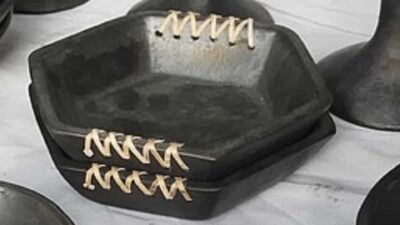
In a Paris design studio, a cobalt-blue vase gleams beneath a skylight—its surface traced with lotus petals and fine white lines that shimmer like silk. Thousands of miles away, in a modest workshop in Jaipur, the same glow flickers from a kiln as artisans lift similar pieces from the fire. In an age of speed and imitation, the Jaipur Blue Pottery endures through deliberate brushstrokes, slow firing, and the quiet authority of the handmade. Its beauty feels grounding—a reminder that patience can still shape meaning. As global tastes shift and new forms emerge, what future might unfold for a craft rooted in luminous color and attentive making?
Jaipur Blue Pottery: Key Takeaways
- Combines Persian glazing methods with Rajasthani traditions.
- Recognized for cobalt blue motifs on a non-clay body.
- Crafted through hand-molding, freehand painting, and low firing.
- Popular products include tiles, tableware, and décor pieces.
- Sustained today by artisan clusters and design initiatives.
Cultural Roots: Origins & Symbolism
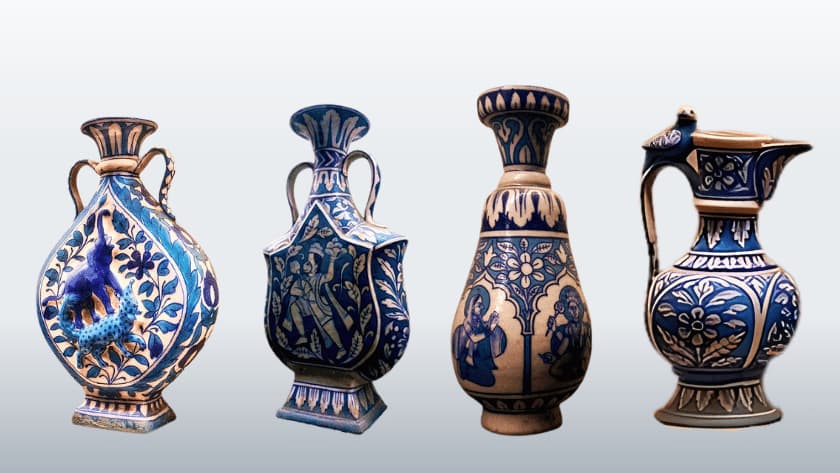
by Neek-Theri, CC BY-SA 4.0, via Wikimedia Commons
Before the first streak of cobalt ever touched Rajasthani sand, the story of Jaipur Blue Pottery began in Persia, where artisans experimented with glass and quartz to capture the translucent glow of Chinese porcelain. Their innovation—a non-clay body paired with a radiant glaze—traveled along the Silk Route, carried by traders and craftspeople who treated beauty as a shared pursuit.
When the Mughals introduced this art form to the Indian subcontinent, it blended with their aesthetic elements of geometry, calligraphy, and illumination. In Rajasthan, under the patronage of Maharaja Sawai Ram Singh II, local workshops adapted the craft to regional tastes, softening imported patterns with vines, lotuses, and stylized peacocks, and deepening the palette to desert blues suited to the local light.
Archival notes from the late nineteenth century mention a royal order for tiles requiring delicate glazing and careful firing to meet courtly expectations. By this time, Jaipur’s Blue Pottery had crystallized into a distinct regional tradition—descended from Persian ingenuity yet shaped unmistakably by Rajasthani hands and sensibilities.
Craftsmanship: Tools & Techniques
Crafted by Hand in Jaipur by Lost & Found Travel
Inside a traditional courtyard workshop, a low hum rises from a grinder turning quartz stone into fine white powder. Artisans move with assured rhythm, their gestures practiced and quiet, following techniques refined over generations.
The Jaipur Blue Pottery begins with a blend of ground quartz, glass, and natural gum mixed into a pliable dough. This non-clay body—light and durable—is pressed into molds and dried beneath Rajasthan’s sun. Once the forms are all set, each surface becomes a canvas for delicate freehand designs applied with fine brushes holding traces of cobalt oxide for blue, copper sulphate for turquoise, iron oxide for brown, chromium oxide for green, and cadmium oxide for yellow. A cloudy final glaze coats the surface, obscuring the detail until the firing reveals it.
In the kiln, at roughly 900°C, flame and mineral meet. The heat binds the pigment, resulting in stable blue tones characteristic of low-temperature firing. Slow cooling demands patience; opening the kiln too early risks cracking, while waiting allows each vessel to emerge whole. What results is not only a crafted object but the visible imprint of time, heat, and human care.
Living Tradition: People & Expression
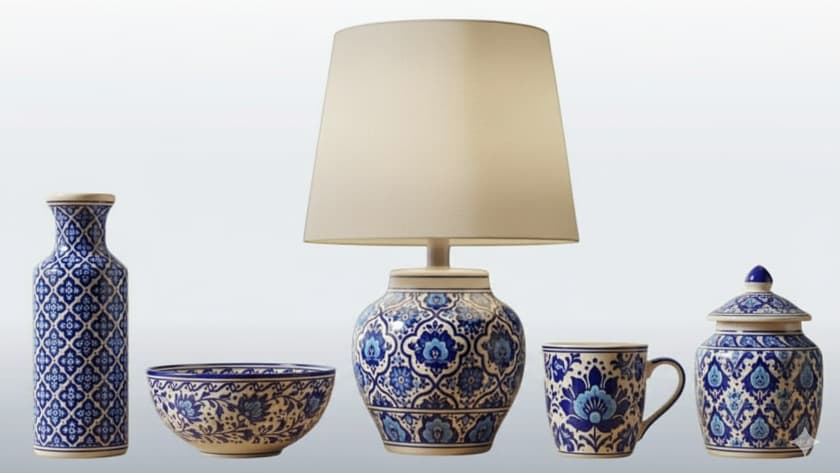
In the bylanes of Jaipur’s Ramgarh and Kot Jewar, Blue Pottery thrives as a community practice. Families who have worked in the craft for generations maintain workshop rhythms that pass knowledge quietly between elders and apprentices. Artisan clusters in Sanganer and Kot Khwaja remain central, producing pieces for local buyers and for collaborations across India and abroad.
Contemporary makers reinterpret inherited motifs through pendant lamps, jewelry, mosaic compositions, and tableware suited to modern environments. Younger practitioners test solar-assisted kilns, natural indigo dyes, and waste-conscious reuse of broken shards. Cooperatives support skills beyond production—such as packaging, catalog design, and digital retail—while studios like Kripal Kumbh and Neerja International work with designers on small-batch décor.
Museums, including the Victoria and Albert Museum and the British Museum, now present Jaipur Blue Pottery within global design narratives. In Jaipur workshops, the tradition continues through direct teaching of brushwork, firing techniques, and finishing methods, allowing for growth while preserving heritage.
Engaging Heritage: Ethics & Display
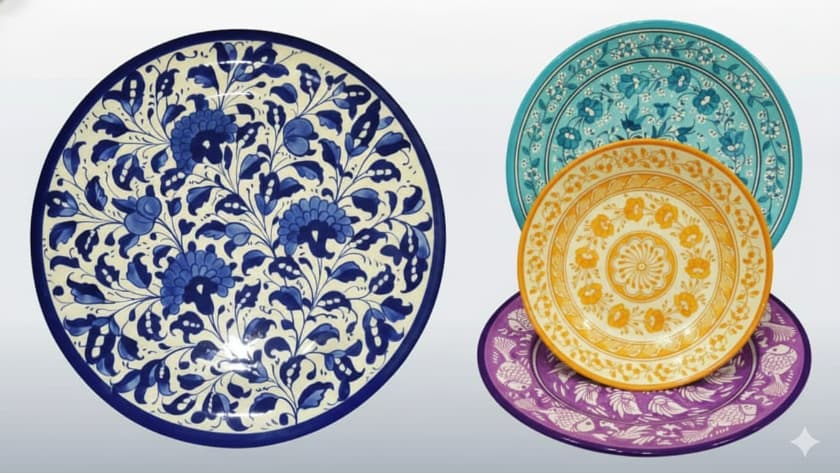
Distinguishing genuine Jaipur Blue Pottery from imitations begins with attention to materials, marks, and provenance. Authentic items are crafted from a non-clay composition of quartz, glass, and natural gum, resulting in a lighter weight compared to standard clay ceramics. Subtle variations in brush strokes suggest that the piece is hand-painted, while machine-made items display consistent repetition. Requesting the maker’s name, workshop, or cooperative affiliation provides further assurance.
Ethical engagement favors transparent sourcing. Fair-trade collectives and community-based studios reinvest in artisan livelihoods, support training, and purchase local materials. Buyers can look for equitable pricing breakdowns and documented partnerships.
For display, place ceramics out of prolonged direct sunlight and support fragile forms with padded stands. Showcasing culturally unique designs along with label information about the region, community, and method pays tribute to the craft’s heritage. Many artisans emphasize the functional use of their pieces, integrating them into daily spaces instead of isolating them as exotic curiosities, which promotes cultural respect.
Preserving Tradition: Challenges & Revival
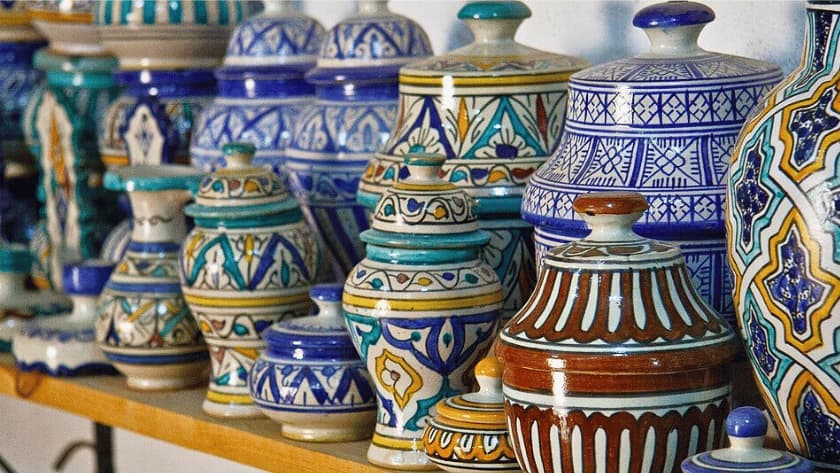
Jaipur Blue Pottery faces familiar challenges like competition from mass-produced ceramics, variable raw material costs, and inconsistent policy support, all of which put a strain on smaller workshops. Tourism disruptions during global crises have exposed the fragility of artisan incomes.
Collective strategies have become essential. Self-help groups and cooperatives pool resources for shared kilns, bulk purchasing, and coordinated festival sales. District craft councils curate exhibitions and trade fairs that connect artisans to varied markets. Design institutes and NGOs encourage product diversification, packaging standards, and digital retail training. Microfinance programs and government-backed loans help clusters adopt energy-efficient kilns or develop partnerships with urban boutiques through cooperative-level agreements.
Institutional initiatives—such as regional craft policies, discussions on geographical indications, and documentation led by museums—seek to preserve heritage knowledge and ensure long-term economic stability. Emerging revival movements focus on collective action through cross-cluster networks, joint branding, and shared e-commerce platforms, creating pathways for continuity at the community level.
Jaipur Blue Pottery: Reflection & Future
When an artisan opens the kiln in Jaipur, what emerges is more than pottery—it is continuity made tangible. Each finished piece carries echoes of hands that have shaped the same luminous blue for centuries, revealing how tradition endures through quiet, persistent care. In a world defined by speed, Jaipur Blue Pottery reminds us of steadiness—of forms shaped not by haste but by deliberate intention. Its glow invites us to imagine futures where handmade practices retain cultural presence even as design landscapes shift. How might communities, markets, and institutions safeguard this fragile craft so its radiance continues into another century?