On a quiet hillside in Manipur’s Ukhrul district, thin coils of smoke drift above earthen kilns. Men and women work in a steady rhythm, shaping vessels whose dark surfaces catch the first light of morning. In this remote landscape, Manipur Longpi pottery endures as one of the Tangkhul Naga community’s most cherished living traditions. Its forms feel both ancient and timely, echoing a world increasingly drawn to slower, more grounded ways of making. Today, as conversations around ecological care and meaningful craft gather urgency, Longpi’s gentle presence invites renewed attention. What might emerge when we pause long enough to sense how an old tradition still listens to its land?
Manipur Longpi Pottery: Key Takeaways
- Handmade by Tangkhul Naga artisans in Manipur.
- Formed from serpentinite and weathered stone mixtures.
- Crafted entirely without a potter’s wheel.
- Fired to dense, iron-rich black stoneware.
- Genuine pieces show subtle asymmetry and weight.
Cultural Roots: Origins & Symbolism
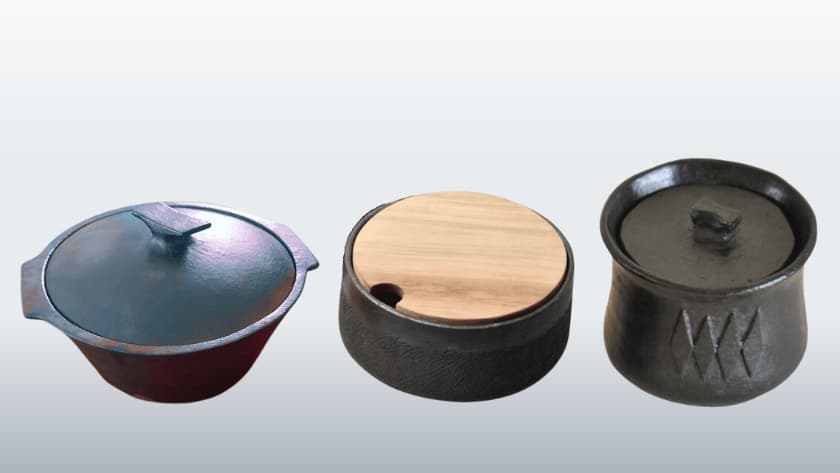
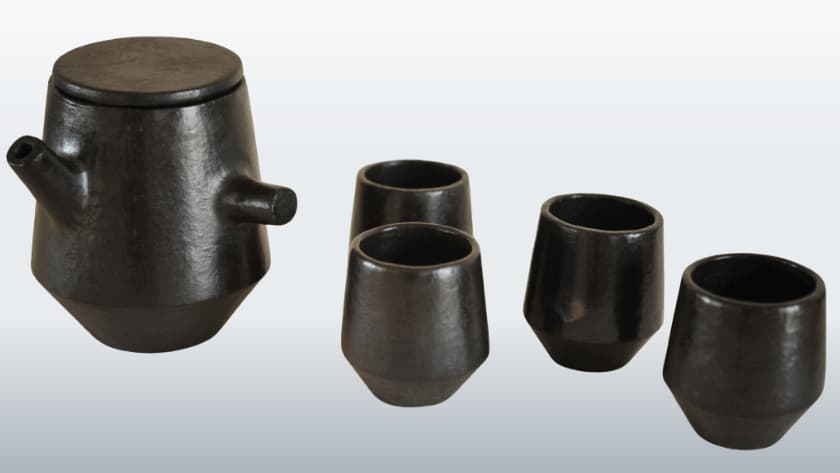
Manipur Black Pottery (Cookware) by NID for USTTAD
Long before aluminum or steel reached India’s northeast, the people of Longpi—a Tangkhul Naga village tucked into Manipur’s mist-draped hills—crafted their daily lives from softened stone. Their craft, known as Longpi Hamlei, is believed to trace back to the Neolithic era, when early communities learned to temper rock with water and fire.
During these early times, people used black stone pottery to store rice, meat, and water, representing essential food in an environment where crops relied on changing monsoons. Traders carried these vessels in cane baskets along forest paths, exchanging them for salt with neighboring Naga groups, marking the craft’s early regional circulation.
The deep black of Longpi pottery, associated with endurance and earth, embodied strength, protection, and continuity. Rounded forms suggested fertility and abundance, their sturdy walls echoing the permanence of the surrounding mountains. The early meanings deeply connected the craft to its environment, laying the foundation for the techniques that would develop and change over time.
Craftsmanship: Tools & Techniques
The Black Stone Pottery of Longpi by DD Manipur
In Longpi, clay is rare, but stone is plentiful. Artisans gather two rocks—salai nali (weathered brown stone) and leshong lung (black serpentinite)—which they crush and mix with water in a 5:3 ratio to form a dense, clay-like paste. The blend is pounded in a wooden mortar (shamkhur), rolled on a trough (likhu), and then shaped with wooden paddles and bamboo beaters (hangpi). No potter’s wheel spins here; instead, forms emerge through practiced rhythm, pressure, and the tactile intuition refined over years.
Once shaped and dried, each vessel is fired in an open bonfire for nearly nine hours at temperatures exceeding 1,200°C. The heat reacts with the iron-rich stone, transforming the surface into a deep, jet black. While the Longpi pottery is still hot, artisans polish it with chiro na leaves (Pasania pachiphylla), which add a subtle sheen through their natural resin. The finished vessel feels cool and dense, giving off a faint bell-like ring when tapped as the workshop fills with the warm scent of stone and smoldering leaves. From these processes arises the living craft carried forward by today’s artisans.
Living Tradition: People & Expression
The twin villages of Longpi Khullen and Longpi Kajui remain home to roughly four hundred families, nearly half of whom continue to practice the craft. Courtyards turn into workshops, rooftops serve as drying yards, and communal firing spaces anchor daily routines. For many artisans, the old meanings still shape their sense of identity, even as their work evolves to meet contemporary needs. One craftsman reflects that the vessels “walk with us,” expressing how present-day life remains intertwined with ancestral tradition.
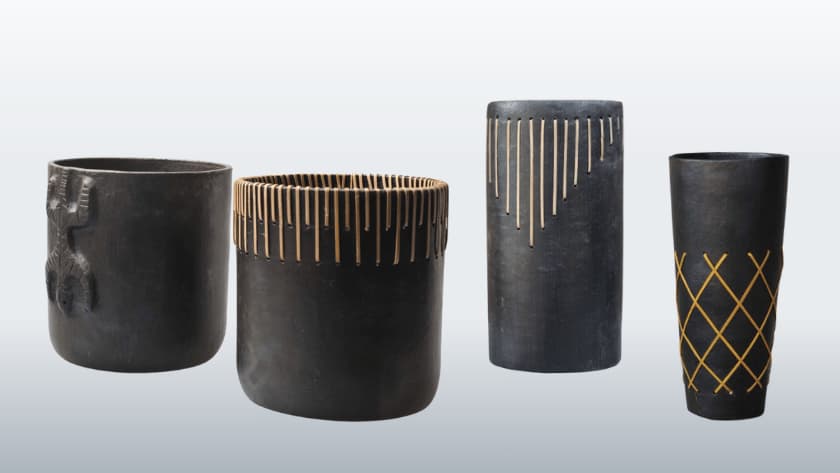
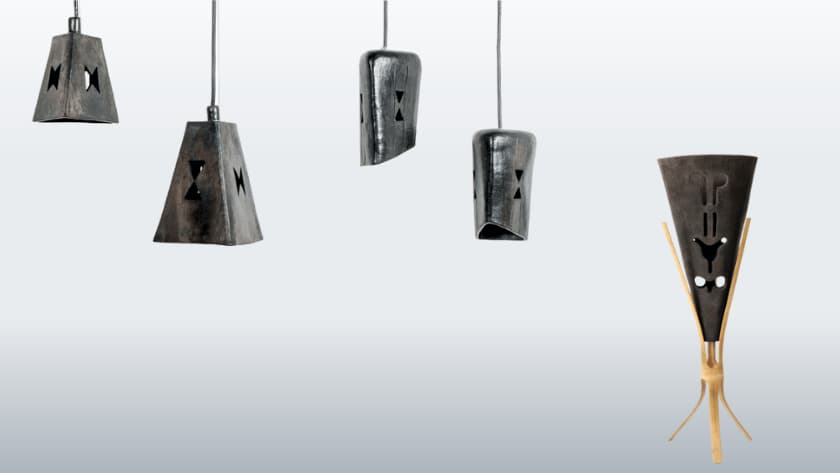
These artisans are both inheritors and innovators. Centered originally on cookware and kettles, Manipur Longpi pottery has now diversified into tableware, lamps, vases, sculptural pieces, and even jewelry, broadening its creative range. Cane weaving is still essential, adding warmth and practicality to handles and lids. Today’s makers adapt shapes and motifs to shifting tastes while maintaining the distinctive heft, color, and presence that define Longpi’s aesthetic character. In this way, the craft remains a vibrant expression of community life.
Engaging Heritage: Ethics & Display
Owning a piece of Longpi black pottery is to hold a fragment of a living tradition. Authentic pieces have subtle asymmetry, a soft gradient sheen from chiro na leaves polishing, and a dense, stone-like texture—natural results of hand-forming and open firing rather than mechanized precision. Ethical engagement begins with sourcing: whenever possible, buy from village cooperatives or certified craft platforms, and ask about maker origin and community affiliation to ensure transparent sourcing and fair compensation.
Display Longpi pottery with intention and respect for its cultural context. Avoid turning ceremonial or symbolic forms into mere décor, and allow vessels to rest or serve naturally within a space. Gentle washing, protection from sudden temperature shifts, and mindful handling will preserve the developing patina, allowing the piece to age in harmony with continued use.
Preserving Tradition: Challenges & Revival
Sustaining Longpi’s kilns amid modern pressures is no small feat. Geographic isolation, high transport costs, limited access to packaging materials, and shrinking local markets make production and distribution difficult. Many young Tangkhuls migrate to cities in search of more regular incomes, while mass-produced alternatives crowd the cookware market. Resource constraints and policy gaps further complicate consistent, community-level production.
Villages enhance their collective resilience by utilizing cooperatives, establishing shared transportation systems, pooling packaging resources, and implementing apprenticeship programs that disseminate knowledge and create opportunity. Festival markets, government craft councils, and national programs expand visibility, enhance design and business skills, and support sustainable production. Community-led workshops and training centers support intergenerational learning, ensuring that Longpi pottery continues to adapt while remaining grounded in collective stewardship.
Manipur Longpi Pottery: Reflection & Future
The story of Longpi pottery reminds us that endurance can embody a unique beauty. In Manipur’s hills, artisans shape vessels that carry sustenance and memory, quietly affirming the value of patience and purpose. Their work suggests that sustainability is not a trend but a long-standing way of relating to land and community.
As global interest turns toward ethical design and mindful consumption, Longpi’s black stoneware offers a grounded perspective: creation that coexists rather than dominates. Supporting sustainable Indian handicrafts becomes an act of honoring both culture and ecology. When you hold a Longpi vessel—warm, weighted, softly gleaming—you carry an invitation to listen. What future might unfold if traditions like these continue to shape how we make, share, and remember?